One of the most valuable benefits of daycare extends beyond academics and childcare. Quality daycare…
What Does a Daily Routine Look Like in an Infant Daycare Program?

For many parents, especially first-time families, one of the biggest questions about childcare is simple: what is the daily routine of a daycare? Understanding that can bring clarity and peace of mind when entering your child into a program.
At Santa Fe Centers, we know that consistency, responsiveness, and structure all play a key role in early development. A well-designed daily routine helps infants feel secure while supporting physical, emotional, and cognitive growth.
If you are exploring options for infant daycare in New Providence, here is what you can expect from a thoughtfully structured day.
Why Routine Matters for Infants
Infants thrive on predictability. While every baby has individual needs, a consistent rhythm to the day helps regulate sleep patterns, feeding, and emotional comfort.
The American Academy of Pediatrics suggests that consistent routines help infants develop a sense of security and support healthy development.
In a daycare setting, routines are designed to be both structured and flexible, allowing caregivers to respond to each baby’s needs while maintaining a calm and organized environment.
Morning Arrival and Transition
The day typically begins with a smooth and welcoming transition from parent to caregiver.
Caregivers:
- Greet each infant individually
- Gather important updates from parents (feeding, sleep, mood)
- Help babies settle into the environment
This transition is important for building trust and easing separation. Over time, babies become familiar with the routine, making drop-off easier for both child and parent.
If you would like to see how this works in practice, you can learn more about our approach on our Infant Program Page.
Feeding Time
Feeding schedules in infant daycare are individualized, not one-size-fits-all.
Caregivers follow each baby’s:
- Bottle schedule or breastfeeding routine
- Introduction to solid foods (when age-appropriate)
- Parent preferences and instructions
Feeding is also a time for bonding and communication. Caregivers talk to infants, maintain eye contact, and create a calm feeding environment, all techniques to encourage productive social skill development.
The Centers for Disease Control and Prevention emphasizes responsive feeding as a key part of healthy infant development.
Active Play and Exploration
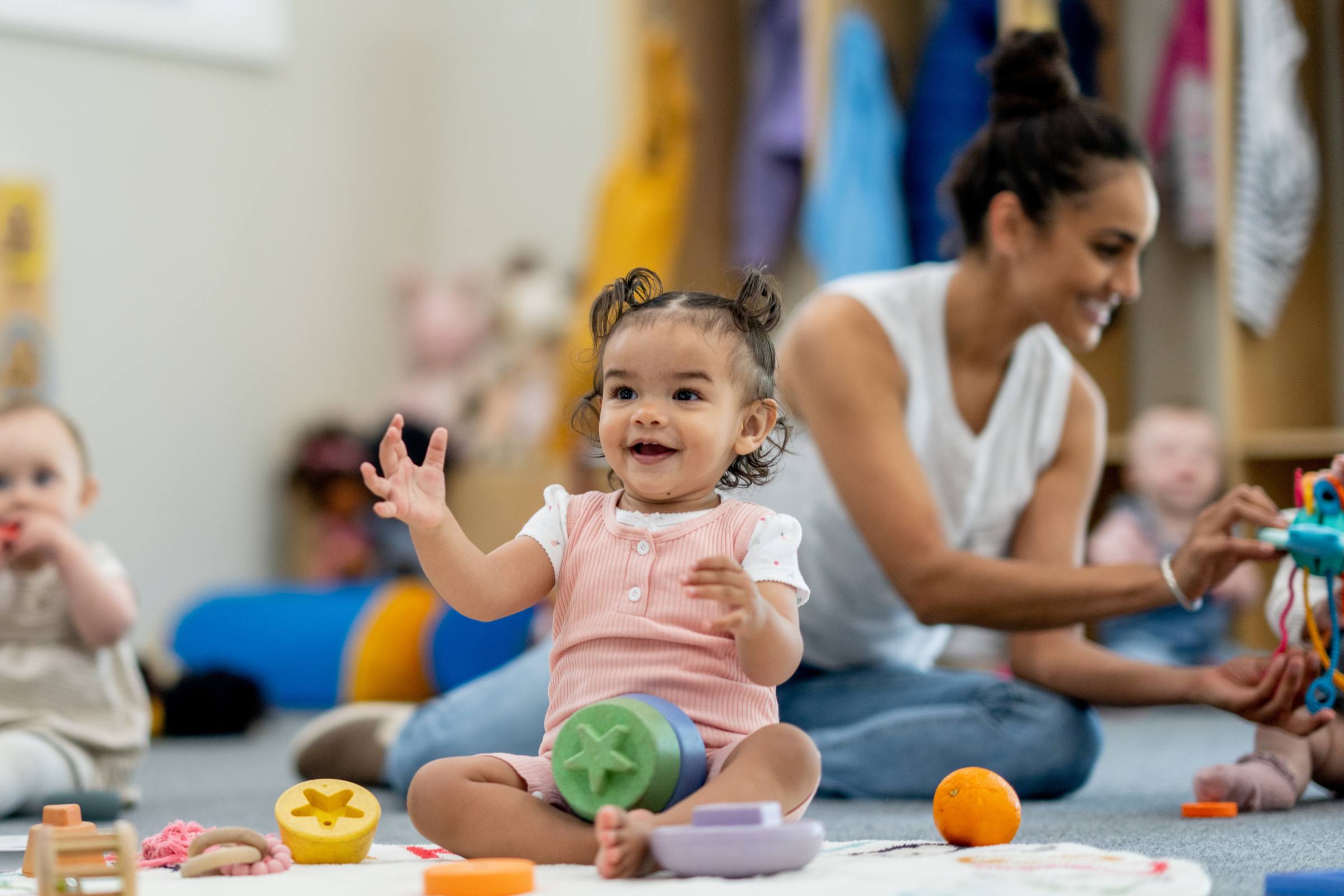
Between feedings and naps, infants engage in supervised play designed to support development.
Activities may include:
- Tummy time to build strength
- Reaching and grasping toys
- Sensory exploration with textures and sounds
- Interaction with caregivers and other infants
These experiences support motor skills, coordination, and early learning.
Our broader early childhood programs are built around these developmental milestones.
Nap Time and Rest
Sleep is a critical part of an infant’s day. In daycare, naps are handled with careful attention to both safety and individual needs.
Infant daycare programs:
- Follow safe sleep practices (placing babies on their backs)
- Provide quiet, comfortable sleeping spaces
- Respect each child’s natural sleep schedule
The Safe to Sleep Campaign highlights the importance of safe sleep environments in reducing risks during infancy.
Caregivers monitor infants closely during naps and ensure a calm transition between sleep and wake periods.
Diapering and Hygiene
Routine diapering and hygiene care are integrated throughout the day.
This includes:
- Frequent diaper changes
- Handwashing and sanitation
- Clean, organized changing areas
These moments are also opportunities for one-on-one interaction, helping infants feel secure and cared for.
Social Interaction and Early Communication
Even before they can speak, infants are constantly learning how to communicate.
Throughout the day, caregivers:
- Talk to infants during routines
- Respond to sounds and expressions
- Encourage eye contact and engagement
The Zero to Three Foundation highlights that early interactions are essential for language and emotional development.
Being around other children also introduces early social awareness, even at a young age.
Outdoor Time and Movement (Weather Permitting)
When possible, infants benefit from time outside.
Outdoor experiences provide:
- Fresh air and sensory stimulation
- Exposure to natural light
- Opportunities for movement and observation
Even simple experiences like watching leaves move or feeling a breeze can be meaningful for infants.
End-of-Day Routine and Parent Communication
At pickup, caregivers provide a summary of the day.
Parents receive updates on:
- Feedings
- Nap times
- Diaper changes
- Activities and mood
This ongoing communication helps parents stay connected and informed.
To learn more about how we partner with families, visit our About Page.
How Routine Supports Long-Term Development
A consistent daily routine does more than organize the day. It helps infants:
- Develop trust and emotional security
- Build healthy sleep and feeding habits
- Strengthen motor and cognitive skills
- Begin understanding patterns and transitions
As infants grow, these routines create a strong foundation for transitioning into our later early childhood programs.
Productive Days for your Child
A well-structured daily routine in an infant daycare program is one of the most important factors in early development. It provides stability, encourages exploration, and supports each child’s unique needs.
If you are searching for infant daycare in New Providence, seeing a program in action can make all the difference.
We invite you to schedule a visit and experience how our daily routines support growth, learning, and care from the very beginning.
Contact us today to learn more!
Related Posts