One of the most common questions parents ask is: What age should a child start…
How Daycare Helps Children Build Social Skills

One of the most valuable benefits of daycare extends beyond academics and childcare. Quality daycare programs help children develop the social skills they need to build relationships, communicate effectively, and navigate the world around them.
For many parents, especially those with infants or toddlers, social development is a major consideration when choosing childcare. Questions like “Will my child make friends?” or “How will daycare help with communication and sharing?” are common and important.
The good news is that daycare provides daily opportunities for children to practice essential social skills in a safe, supportive, and age-appropriate environment. Through interaction with peers and guidance from caregivers, children learn how to communicate, cooperate, and build confidence that will benefit them throughout their lives.
Why Social Skills Matter in Early Childhood
Social skills are the tools children use to interact with others successfully. These skills begin developing from infancy and continue to grow throughout childhood.
Examples of important social skills include:
- Communication
- Sharing and taking turns
- Listening
- Cooperation
- Empathy
- Problem-solving
- Emotional regulation
Strong social skills are linked to better academic outcomes, healthier relationships, and greater confidence later in life.
According to the Centers for Disease Control and Prevention, social and emotional development is a critical part of healthy childhood growth and helps children learn how to form positive relationships and manage emotions effectively.
How Daycare Encourages Social Development
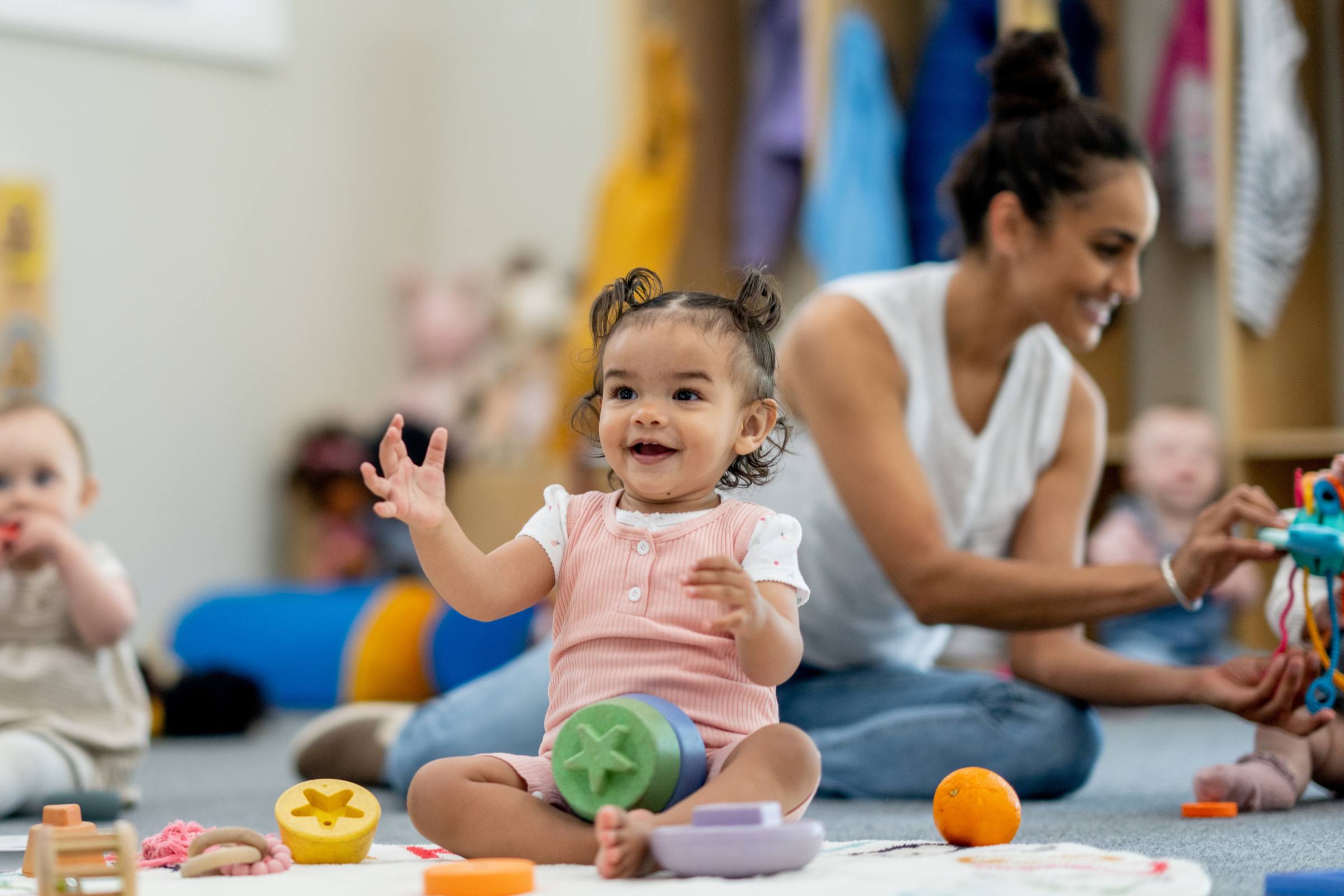
One of the biggest advantages of daycare is that children spend time interacting with peers on a daily basis.
Unlike one-on-one care environments, daycare naturally creates opportunities for children to learn through observation, communication, and shared experiences.
Our early childhood programs are designed to support these developmental milestones through age-appropriate activities and guided interaction.
Learning to Share and Take Turns
Sharing is not something children automatically know how to do. It is a skill that develops through practice.
In daycare settings, children regularly participate in activities that involve:
- Sharing toys and materials
- Waiting for their turn
- Participating in group activities
- Working together toward common goals
While these situations can sometimes be challenging, they provide valuable opportunities for growth.
Through consistent guidance, children begin to understand cooperation, fairness, and patience.
These foundational experiences support healthy child social development and prepare children for future classroom environments.
Building Communication Skills
Communication is one of the most important social skills children develop during the early years.
Daycare environments encourage communication through:
- Conversations with caregivers
- Group activities
- Storytime discussions
- Singing and music
- Peer interaction
For infants, communication begins through facial expressions, sounds, and responsive interactions.
Our infant program focuses on nurturing these early communication skills through attentive caregiving and meaningful engagement.
As children grow, they begin expressing needs, sharing ideas, and participating in conversations with increasing confidence.
Developing Social Skills for Toddlers
The toddler years are a period of tremendous social growth.
Toddlers are learning:
- How to play alongside peers
- How to express emotions
- How to follow simple directions
- How to interact within a group setting
These experiences help children develop the social skills for toddlers that are essential for preschool and kindergarten readiness.
Our toddler program provides opportunities for guided play, collaborative activities, and positive social interaction throughout the day.
Learning Through Observation
Children learn a great deal simply by watching others.
In daycare settings, children observe peers:
- Solving problems
- Following routines
- Communicating with adults
- Managing emotions
- Participating in activities
Research from the Harvard Center on the Developing Child highlights the importance of responsive relationships and social interaction in supporting healthy brain development during the early years.
These observations help children build confidence and learn appropriate social behaviors.
Building Empathy and Emotional Awareness
Empathy develops gradually as children begin recognizing and understanding the feelings of others.
Daycare provides opportunities to:
- Comfort friends who are upset
- Celebrate others’ successes
- Recognize emotions
- Practice kindness and cooperation
Caregivers play an important role by modeling positive interactions and helping children navigate social situations.
These experiences contribute significantly to overall daycare socialization and emotional growth.
Developing Confidence in Group Settings
Many children experience their first group environment in daycare.
Being part of a classroom community helps children:
- Gain confidence
- Feel comfortable around others
- Participate in group activities
- Develop a sense of belonging
These experiences can make future transitions into preschool, pre-K, and elementary school smoother and less stressful.
You can learn more about our approach to early childhood education on our About Santa Fe Centers page.
The Long-Term Benefits of Daycare Socialization
The social experiences children gain in daycare often have lasting benefits.
Research suggests that children who participate in high-quality early childhood programs may demonstrate stronger:
- Communication skills
- Peer relationships
- Emotional regulation
- School readiness
- Confidence in group settings
These are just some of the many benefits of daycare that extend beyond academics and childcare.
By practicing social interaction every day, children build skills that support success both inside and outside the classroom.
What Parents Can Do at Home
While daycare provides valuable opportunities for social development, parents play an important role as well.
You can support social growth by:
- Encouraging conversation
- Reading together
- Modeling respectful communication
- Arranging playdates
- Helping children name and understand emotions
When home and daycare work together, children benefit from consistent support and encouragement.
Contact Us to Learn More
At Santa Fe Centers, we believe social development is just as important as academic growth during the early years. Through meaningful interactions, guided activities, and supportive relationships, children develop the communication and confidence they need to thrive.
To learn more about our programs or schedule a tour, please Contact Santa Fe Centers today.
Frequently Asked Questions
How does daycare help with social skills?
Daycare provides daily opportunities for children to interact with peers, practice communication, learn cooperation, and develop confidence in group settings.
What social skills do toddlers learn in daycare?
Toddlers learn skills such as sharing, taking turns, expressing emotions, listening, cooperating, and communicating with both peers and adults.
Is daycare good for child social development?
Yes. High-quality daycare programs support child social development by creating opportunities for interaction, guided play, and positive relationship building.
Does daycare help children make friends?
Daycare allows children to interact regularly with peers, helping them learn how friendships develop and how to navigate social situations.
Can infants benefit from socialization?
Yes. Infants benefit from observing others, engaging with caregivers, and experiencing early social interactions that support emotional and communication development.
What are the long-term benefits of daycare socialization?
Children who develop strong social skills early often demonstrate greater confidence, stronger communication abilities, improved emotional regulation, and better school readiness.
How can parents support social development outside of daycare?
Parents can encourage social growth through conversation, play, reading, emotional coaching, and opportunities for positive peer interaction.
Related Posts